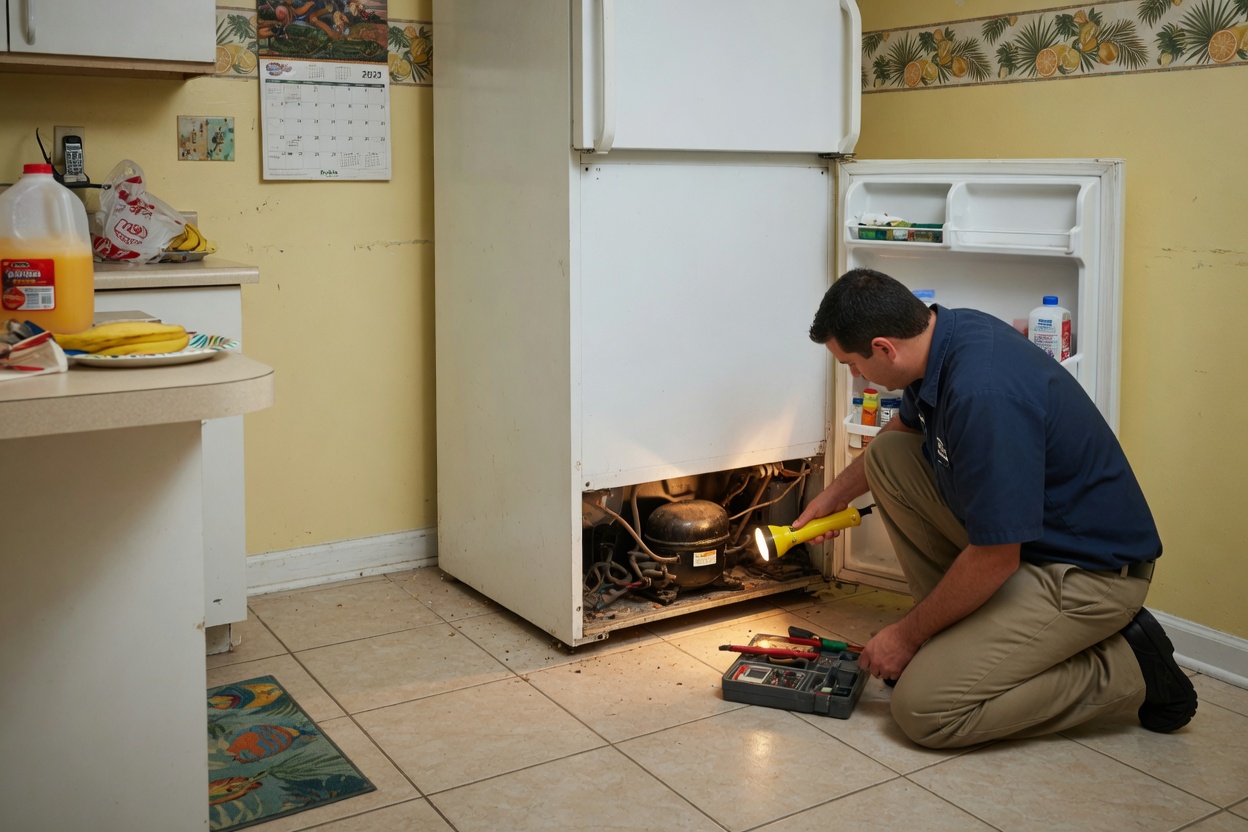
Signs something is wrong
- Fresh-food or freezer compartment warming while the motor still runs
- Water under the refrigerator or inside the crisper drawers
- Frost on the back wall or a fan that never seems to rest
- Ice maker silent, jammed, or leaking into the freezer
- Clicking, buzzing, or a new rattle from the rear
- Door that feels easy to close because the gasket is tired
Before you request a repair
Confirm the door closes on a dollar bill all the way around, that the controls were not bumped, and that the condenser has room to breathe. If food is warming, move perishables to reliable cold storage and keep the door shut. Do not tip a wet refrigerator or test parts at the rear while it is plugged in.
Heat and humidity change the job
Leon County summers put a constant load on any refrigerator, and a garage unit feels it first. A condenser stuffed with dust, a door left cracked by a bin, or packages blocking the interior vents can look like a failed compressor because the cabinet runs and still will not catch up.
Write down the thermostat setting and whether both compartments are affected. A freezer that is still hard-frozen while the fresh food is warm points somewhere different than a machine that is warm everywhere. That single note saves a guessing game.
Water on the floor is not one fault
A puddle can be a clogged defrost drain, a cracked drain pan, a supply line to the ice maker, or condensation from a gasket that no longer seals. In older Midtown and Myers Park kitchens the refrigerator often sits tight to the wall, so a small leak stays hidden until the floor buckles.
Shut off the saddle valve or the stop under the sink if the ice-maker line is the obvious source and you can reach it dry. Leave the machine plugged in only if the floor and outlet are dry. A wet outlet is a reason to stop, not a reason to keep testing.
After a storm or a long outage
Tallahassee thunderstorms and the occasional hurricane outage leave people opening the door every few minutes to check. A closed refrigerator holds cold longer than an open one. As a practical rule, perishable food that has sat above refrigerator temperature for more than a few hours should be discarded rather than tasted.
When power returns, listen for the compressor and give the cabinet time before you decide it has failed. A machine that was warm for a day may run a long time and still be fine. Note any burning smell or a breaker that trips immediately. Those are stop signs.
What a useful diagnosis needs
The model tag is usually inside the fresh-food compartment, on the ceiling or a side wall. The serial number matters because the same brand shipped several designs under one marketing name. A photo of the tag, a photo of the symptom, and the day the noise or warmth started are more useful than a guessed part number.
Sealed-system work is not a gasket or a fan. If someone on the phone is sure it is the compressor before they have heard whether the freezer is cold, slow down. Repair only makes sense after the simple airflow, seal, and defrost questions are answered.
Questions about refrigerator repair
Should I unplug a refrigerator that is not cooling?
Unplug it if you smell burning, the breaker trips, or the outlet and floor are wet. If it is simply warm and the area is dry, leave it running, keep the door closed, and move perishable food.
Is a running refrigerator proof that the compressor is fine?
No. Fans, defrost heaters, controls, and blocked vents can leave the motor running while the cabinet warms. Which compartment is cold is the more useful fact.
Why does my garage refrigerator struggle in July?
Many household refrigerators are not rated for a closed Florida garage. High ambient heat makes the condenser work harder, and dust on the coils makes it worse. Share that the unit lives in the garage when you write in.
Can I add refrigerant myself?
Household refrigerators are sealed systems. Adding refrigerant from a kit is not a homeowner repair, and a low charge usually means a leak that has to be found first.