Signs something is wrong
- Clothes still damp after a full cycle
- Drum that will not turn, or a belt squeal at startup
- No heat, low heat, or heat that will not shut off
- Burning smell, scorched lint, or a hot laundry-closet door
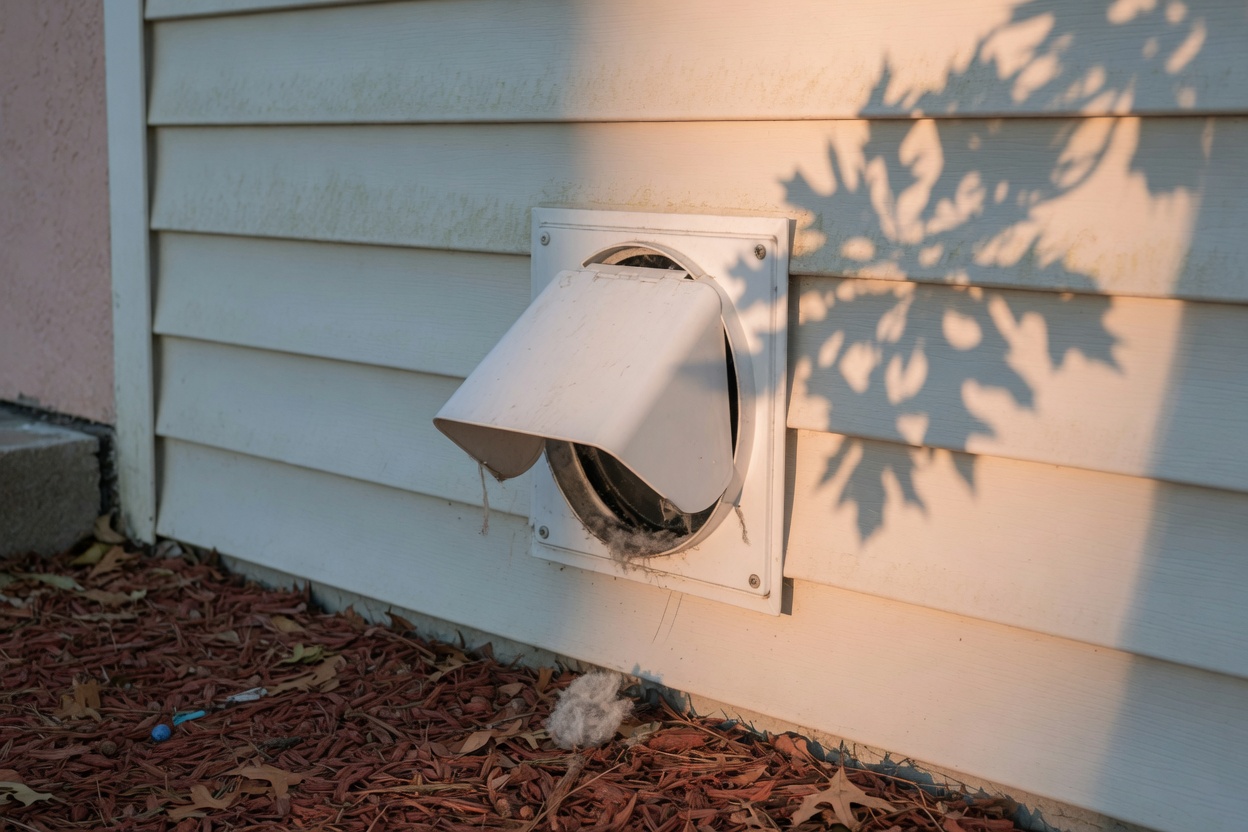
- The outside vent flap never moves while the dryer runs
- A thump once per revolution from a shoe or a worn roller
Before you request a repair
Clean the lint screen and confirm the outside flap opens when the dryer is running. Stop using a dryer that smells hot or burnt. Do not run it with the vent disconnected as a permanent setup, and do not remove the front panel while it is plugged in.
Air has to leave the house
Electric dryers are the common installation in Tallahassee, and they only work if moist air can get out. A vent that runs up through a two-story Killearn or Southwood chase, a crushed foil transition hose, or a bird nest in a wall cap will stretch every cycle.
Go outside during a cycle and watch the flap. If it barely lifts, the restriction is real even when the lint screen looks clean. Screens belong in the dryer door, not screwed over the outside hood.
No heat is not always the element
A dryer can tumble with no heat because of a blown thermal fuse after a blocked vent, a failed cycling thermostat, or an element. Gas dryers, less common inside the city and more common on some rural lots toward Woodville, need an igniter and a gas supply. Those are different machines.
Say whether you have ever seen a flame or only electric heat, and whether the drum still turns. A dryer that is hot but will not tumble is a belt, roller, or motor symptom. A dryer that tumbles cold is a heat or airflow symptom.
Humidity makes clothes lie
On a July afternoon a load can feel damp for a few minutes after it is actually dry, because the laundry room air is wet. Give the load a short air-out before you declare the dryer failed. If the same towels are still heavy after a second cycle and the outside flap is lazy, believe the vent.
Closet installations in cottages run hotter. If the closet door is closed and the dryer is star-rated for a minimum opening, the cabinet overheats and the fuse opens. That looks like a dead element the next day.
Fire risk is the reason to stop
Lint is fuel. A burning smell, a scorched spot on the lint screen, or a cabinet that is too hot to touch is a reason to unplug the dryer and leave it off. Do not finish the load on air fluff while you wait.
When you write in, include the vent path if you know it: straight through the wall, up to the roof, or across the garage. Also include the model tag from inside the door. Coverage for a Tallahassee address is confirmed before anyone arrives.
Questions about dryer repair
I cleaned the lint screen and it still takes two cycles. What next?
Check the outside flap and the hose behind the dryer. The screen is only the first filter. A crushed or long vent is the usual reason a clean screen still produces damp clothes.
Is a foil vent hose acceptable?
Thin foil transition hoses crush and hold lint. A short rigid or semi-rigid metal transition is the sturdier setup. Do not hide a plastic vinyl hose inside a wall.
The drum turns but there is no heat. Can I keep using it?
Air fluff will not dry a wet load in this climate and it hides the fault. Leave the dryer off if there was any burning smell. Otherwise stop using heat until the airflow and the heat circuit are checked.
Why does the laundry closet smell hot only in summer?
The dryer is dumping heat into a small room that is already warm, often with the door closed. Restricted exhaust makes that worse and can open a thermal fuse.